No products in the cart.
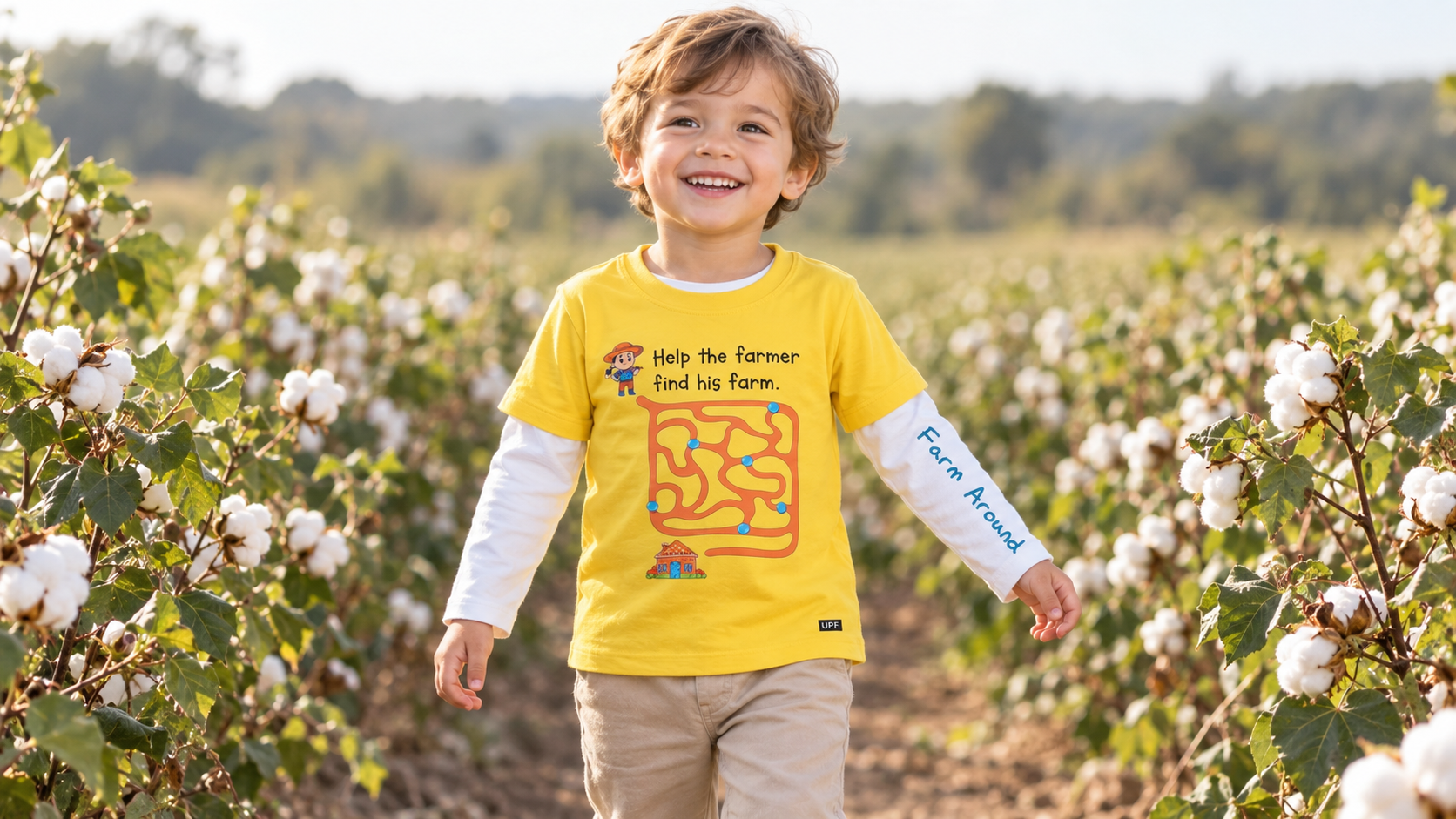

Shopping for organic cotton baby clothes usually starts with a simple question: does "organic" actually mean anything, or is it just a label on a hangtag? For parents comparing organic baby clothes against a regular cotton onesie, the difference isn't always obvious at a glance. The fabric feels similar, the price tag looks bigger, and the marketing language can start to blur together. This guide breaks down what organic cotton is, what a GOTS Certified Organic Cotton label is supposed to guarantee, and what it means for a baby's or toddler's skin day to day — in plain language, with sources you can check for yourself.
Organic cotton is cotton grown under a specific set of agricultural rules: no synthetic pesticides, no synthetic fertilizers, and no genetically modified seed. That's an agricultural distinction, not a fabric-feel distinction. A T-shirt made from organic fiber isn't automatically softer, cooler, or more breathable than a T-shirt made from conventional cotton — the growing method affects what happens on the farm, while weave, thread count, and finishing affect how the fabric behaves on skin.
This distinction matters because it's easy for "organic" to get stretched into a much bigger promise in casual conversation — "organic" quietly becoming shorthand for "safe," "GOTS-certified," or "GOTS-certified organic cotton." Those are separate claims that require their own evidence, and a parent comparing clothes for kids should know the difference between what organic cotton documents and what it doesn't.
The Global Organic Textile Standard (GOTS) is widely regarded as a leading independent certification for organic textiles worldwide, and it checks more than the raw fiber. According to the standard's own published criteria, GOTS Certified Organic Cotton products must contain a minimum of 70% certified organic fiber, and every stage of processing — spinning, dyeing, printing, and manufacturing — has to be independently certified for a finished garment to legitimately carry the GOTS label. The standard also sets restrictions on the chemical inputs, dyes, and auxiliaries used during processing, alongside baseline social criteria for the people working in the supply chain.
Two things are worth understanding clearly:
At HQSAGA™, our approach to organic baby clothes starts from that same standard: sourcing fiber and working with partners who can document how the fabric was grown and processed, rather than treating "organic" as a marketing word applied after the fact.
Babies and toddlers have thinner, less mature skin than adults, and their skin barrier continues developing through the first year or more of life. Peer-reviewed research on the infant skin barrier has found that an infant's outer skin layer (the stratum corneum) is measurably thinner than an adult's, and that its water-handling and barrier properties are still maturing well past birth — part of why pediatric and dermatology guidance consistently points parents toward soft, breathable, non-restrictive fabrics for everyday wear, especially in hot weather or during long stretches of outdoor play. Cotton, as a natural fiber, is widely recognized as breathable and gentle against skin, which is one reason it remains the default fabric choice across the baby clothes market.
It's worth being precise here, because it's a common point of confusion: cotton being a natural, breathable fiber does not automatically make a garment "GOTS-certified organic cotton" or "GOTS-certified." Those are separate, specific claims that depend on how the fabric was processed, dyed, and finished — not on fiber type alone. A parent shopping for their child's skin should look at the fabric composition, the finishing process, and any relevant certification documentation together, rather than assuming one detail (like "100% cotton") answers every question about safety.
Here's a practical way to evaluate organic cotton baby clothes and children's clothing more broadly when you're shopping, whether that's for everyday clothes for kids or something a little more special:
Because "organic" gets used loosely across the children's clothing market, a few myths tend to repeat themselves in parenting forums and product reviews. It's worth addressing them directly.
Myth
"Organic" and "natural" mean the same thing. They don't. "Natural" is an unregulated marketing term with no standard definition, while "organic," when paired with a real certification like GOTS, refers to a documented farming and processing standard that can be independently verified. A fabric can be marketed as "natural" without meeting any organic criteria at all.
Myth
If the cotton is organic, the whole garment must be safe for everyday wear. Organic fiber content is one input among several. Dyes, prints, elastic, snaps, and trims are all separate components that can affect how a garment interacts with sensitive skin, and GOTS certification is specifically designed to extend scrutiny to those processing stages — which is exactly why full supply-chain certification matters more than a raw-fiber claim alone.
Myth
Every brand that says "organic cotton" has the paperwork to prove it. Unfortunately, this isn't guaranteed. Because "organic" isn't a legally protected word for every category of goods the way it is for certain food products, textile brands can use the term more loosely than parents might assume. That's precisely why looking for a named, verifiable certification — and being willing to ask a brand for its certificate — is a more reliable filter than the word "organic" printed on its own.
For a brand built around everyday clothing for outdoor play, fiber sourcing isn't a side detail — it's the foundation of the product. When we talk about organic cotton baby clothes, we mean fiber sourcing decisions made with documentation in mind: knowing where the cotton was grown, how it was processed, and being able to answer a parent's question about certification with something more concrete than "trust us." That's also why HQSAGA™ pairs organic cotton with built-in UPF 50+ fabric testing in our everyday pieces — designed for the reality that most childhood happens outside, from daycare pickup to backyard play to beach afternoons. For more on what that rating actually means, see our UPF 50+ fabric testing guide.
If your family is comparing a small kids clothing brand against a larger premium kidswear label, the sourcing question is a fair one to ask either way: what does "organic" mean here, and can you show me? The same checklist applies whether you're standing in a store or comparing baby clothes online — a certification name and a fiber percentage tell you more than the word "organic" on its own, wherever you're shopping.
For families building out a wardrobe for daycare, playgrounds, and everything in between, most of what actually gets worn splits into two rough categories: durable everyday basics, and a handful of pieces saved for photos, holidays, or a grandparent's visit. Whichever category you're shopping for, the practical takeaway is the same: organic cotton is a meaningful, verifiable agricultural and supply-chain standard, not a vague feel-good word. When it's paired with a real certification like GOTS, it gives parents something they can actually check rather than something they have to take on faith. That's the standard worth shopping by, whether you're buying baby clothes from a small kids clothing brand or a larger premium kidswear label — including here at HQSAGA™, where we treat sourcing documentation as part of the product, not an afterthought.
One more practical point worth keeping in mind: how you wash a garment affects how it performs over time, regardless of fiber type. Cotton generally holds up well to regular washing, but hot water, high heat drying, and harsh detergents can accelerate wear and fading on any fabric, organic or not.
Gentle, cooler washes and air- or low-heat drying tend to preserve softness and shape for longer — a small habit that stretches the useful life of clothes for kids who are, by nature, hard on their wardrobe. This isn't a performance claim about any specific product; it's a general fabric-care principle worth keeping in mind whether the piece in question is organic cotton baby clothes, a hand-me-down, or something picked up secondhand.
A few pieces from the organic cotton range:
Long-sleeve UPF 50+ top, 100% GOTS-Certified Organic Cotton, UPF 50+ tested by TÜV SÜD. Sizes 1T–5T.
Shop Now →Short-sleeve organic cotton graphic tee, 100% GOTS-Certified Organic Cotton. Sizes 1T–5T.
Shop Now →The full organic cotton collection shows everything currently in stock with certification on file.
Not on its own. Organic refers to how the cotton fiber was farmed. Whether a finished garment is free of certain chemical residues depends on how it was processed and dyed, which is a separate claim that should be backed by its own documentation, such as GOTS certification.
No, but it's widely considered a leading global standard for organic textile processing, covering both environmental and basic social criteria across the supply chain, verified by an approved third-party certifier.
Not necessarily. Softness is mostly determined by thread count, weave, and finishing, not by whether the fiber was grown organically. Organic and conventional cotton can both be woven into soft or coarse fabric.
Because a garment passes through many hands after harvest — spinning, dyeing, cutting, and sewing. GOTS certifies each of those stages so the "organic" claim holds all the way to the finished piece of clothing, not just at the raw-fiber stage.
Ask for the GOTS Scope Certificate or equivalent documentation. A brand that holds current certification should be able to share it or point to where it's listed.
Organic cotton, when it's backed by real certification, is one of the more concrete things a parent can check before buying children's clothing — it's a documented standard, not a feeling. Whether you're comparing organic baby clothes across a few different kids clothing brands or just trying to understand what's actually printed on a hangtag, asking for the paperwork behind the word "organic" is a reasonable, easy habit to build. It's the same standard we hold ourselves to at HQSAGA™ as we source organic cotton baby clothes for everyday play, and it's a good filter to apply anywhere you shop next — including what to look for when buying toddler clothes online.
Leave a comment