No products in the cart.
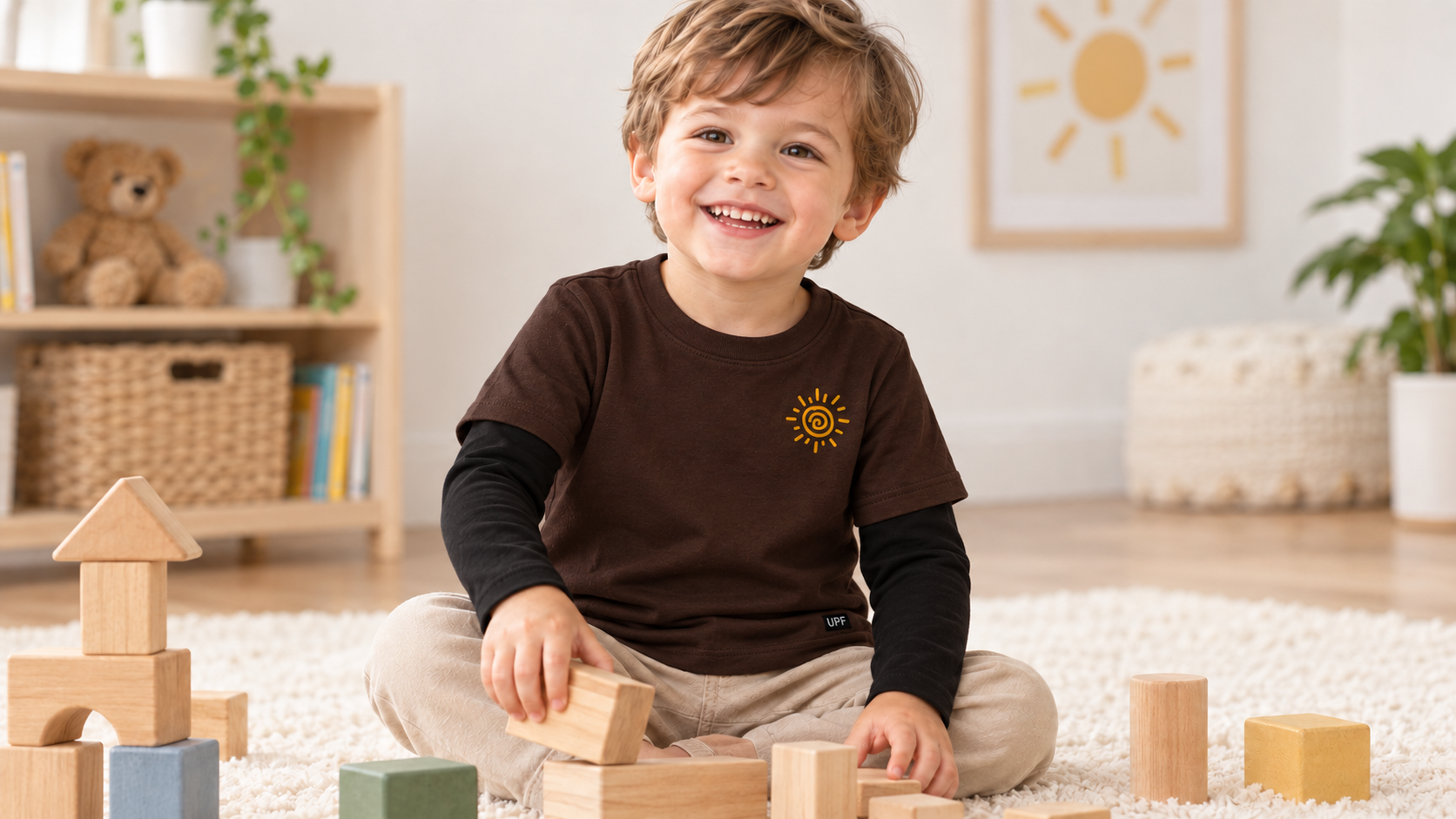

Every parent has pulled a scratchy tag out of a shirt, or paused mid-scroll to wonder whether that cute hoodie’s drawstring is actually a safety risk. These aren’t just comfort questions — they’re safety questions. And unlike a lot of parenting decisions that come down to gut feel, this one has real, checkable answers.
The U.S. Consumer Product Safety Commission (CPSC) sets mandatory safety standards for children’s clothing, and most parents have never heard of them. Here’s what those standards actually say, and what to look for the next time you’re shopping kids clothing, whether that’s in a store or scrolling kids clothes online.
Drawstrings. Concerns about drawstrings on children’s outerwear go back to 1996, when CPSC first issued guidelines after a string of entanglement and strangulation incidents involving playground equipment, bus doors, and car doors. The standard calls for removing hood and neck drawstrings from children’s upper outerwear in sizes 2T through 12, and limits waist and bottom drawstrings to a maximum extension of 3 inches on each side. When you’re shopping, check that any neck-area drawstring has been removed entirely or swapped for a toggle or elastic closure instead.
Flammability. Federal flammability rules (16 CFR Part 1615/1616) apply specifically to children’s sleepwear. Everyday toddler clothes and daywear are treated differently — snug, tight-fitting garments are actually exempt from the flame-resistant treatment requirement, because a close fit itself reduces flammability risk. That’s part of why kids’ pajamas often feel stiffer or more textured than a regular T-shirt: the flame-resistant treatment changes the fabric’s hand-feel.
Small parts and decorations. Buttons, snaps, and embellishments on clothing sized under 3T are expected to pass CPSC’s small parts cylinder test. If a decorative button or snap is small enough to fit inside that test cylinder, it’s considered a choking risk for kids under three — something worth a second look before buying anything with loose or decorative hardware for a younger toddler.
None of this means every garment on the market has been independently tested — brand practices vary. But these are real, checkable federal standards, and it’s completely fair to ask a brand how its toddler clothes or baby clothes are tested against them.
This is where marketing language tends to get ahead of the paperwork. A garment being “lab tested” is not the same statement as being “CPSC certified” or “CPSC approved” — the CPSC doesn’t pre-approve individual products. Brands are responsible for their own compliance and documentation, typically formalized through a Children’s Product Certificate for the applicable product category. If a children’s clothing brand’s marketing implies government approval it can’t actually document, that’s worth a second look before you buy.
Safety compliance is the floor, not the whole picture. For everyday clothes for kids — daycare mornings, playground afternoons, a nap-resistant toddler who refuses to sit still — comfort features make a real difference in how much a piece of clothing actually gets worn:
Whether you’re browsing kids clothes online from a big retailer or a smaller kids clothing brand, a short mental checklist cuts through marketing language fast:
Buying baby clothes online adds convenience but removes your ability to feel the fabric or check the stitching before you buy. A few habits help close that gap: read the full fiber content list rather than just the product title, check the return policy before ordering multiples of the same size, and look for real customer photos where available — they tend to show fit and texture more honestly than a studio product shot ever will. For toddler clothing especially, sizing varies meaningfully between brands, so a size chart with real measurements — not just age ranges — is worth checking before your cart fills up.
Not every fabric behaves the same way, and knowing the basics helps when you’re comparing listings across a kids clothing brand or a broader marketplace of kids clothes online.
Widely used across children’s clothing for general breathability and softness. Quality varies by weave and finishing, so “100% cotton” alone doesn’t guarantee a particular feel or performance.
Often combined with a small percentage of stretch fiber for better range of motion — useful for active toddlers, though it changes the fabric’s overall composition, worth checking if you specifically want an all-natural fiber content.
Sometimes used in outerwear or swimwear for water resistance or quick drying. Not inherently worse for kids, but they behave differently than cotton in terms of breathability and should be evaluated for the actual use case.
Common in outerwear and pajamas, and subject to specific flammability testing categories under U.S. rules, since raised-fiber surfaces can burn differently than a plain weave.
The most useful wardrobe principle for toddler clothes: fewer, more durable pieces beat more, cheaper ones. Toddlers move through phases fast — sizing, interests, mess-making ability — so a capsule of 8–10 pieces that actually survive the wash tends to outperform 25 pieces that pill after three cycles.
A few habits round this out: check the size chart against your toddler’s actual measurements rather than the age label, buy seasonally instead of whenever something looks cute, and leave a little room to grow — toddlers outgrow clothes faster than most parents expect.
HQSaga’s children’s clothing is designed with the criteria above built in from the start — no hood drawstrings, decorations sized and tested against CPSC’s small parts guidance, and double-stitched seams meant to hold up through repeated washing.
Built-In UPF 50+ coverage
The UPF 50+ collection adds built-in UPF 50+ coverage to the everyday daywear lineup — Shop Now → — and the fabrics page covers material sourcing and certifications in full, if you want to look into the specifics yourself rather than take a hangtag’s word for it.
Because “safe,” “premium,” and “protective” show up constantly across the kids clothing and children’s clothing brand market, it’s worth reading past the adjectives to the specifics. A product description that names an actual standard, a specific fiber percentage, or a testing method is generally offering more than one that leans on general reassurance alone. This isn’t unique to kids’ clothing, but it matters more here, given that these products sit directly against a child’s skin for hours at a time.
No. CPSC sets safety standards and enforces them, but it doesn’t pre-approve or endorse individual brands or products. Compliance is the brand’s responsibility, and claims like “CPSC approved” deserve a closer look unless a brand can explain exactly what that means for their specific product.
Not universally — but neck and hood drawstrings are specifically restricted on children’s upper outerwear in sizes 2T through 12, and waist drawstrings face additional size-based limits, based on documented entanglement risk.
Federal flammability rules under 16 CFR Part 1615/1616 apply specifically to children’s sleepwear. Snug-fitting daywear is generally exempt from the flame-resistant treatment requirement, since a close fit itself reduces flammability risk.
Fiber content is one factor among several. Construction, dyes, trims, and finishing all affect how a garment performs and feels, so fiber alone doesn’t guarantee comfort or safety — it’s one useful data point among others.
The inability to physically check fabric and stitching before buying. Reading full fiber-content details, checking real measurements instead of age labels, and reviewing the return policy help offset that gap.
Choosing safe, comfortable children’s clothing comes down to two questions that are easy to blur together: does this meet real safety standards, and will my child actually want to wear it? Both are worth checking deliberately, rather than trusting a product photo or the word “safe” printed on a label. Whether you’re comparing a specific children’s clothing brand, browsing kids clothing broadly, or building out a toddler’s wardrobe piece by piece, a few minutes spent reading fiber content, checking drawstring placement, and asking a brand direct questions goes a long way.
Shop the full HQSaga collection
UPF 50+ collection
Our organic cotton fabrics
Leave a comment