No products in the cart.
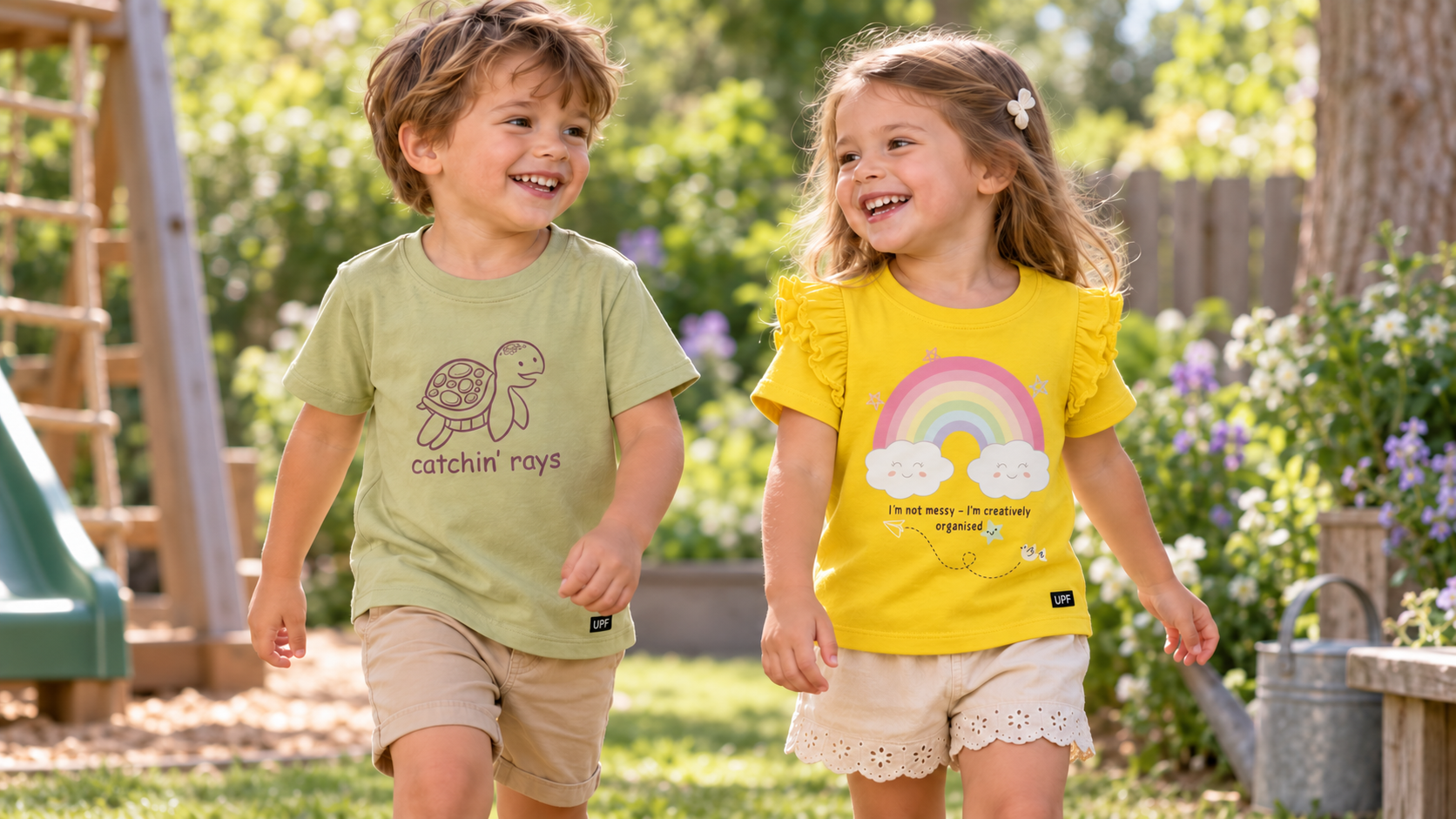

Walk into any children’s clothing section and the boy/girl split is immediate and obvious — different sides of the store, different color palettes, different graphics. Toddler Boy vs Girl Clothing, What’s less obvious is that underneath all of that, the garments are often cut identically: the same block, the same size chart, the same fit.
This guide covers where the differences actually matter (sizing variance between brands, fit philosophy) and where they don’t (UPF 50+ coverage, fabric quality, durability) — with practical tips for shopping toddler boy clothes, toddler girl clothes, or something in between.
Most toddler clothing in the 1T–5T range uses a single size chart regardless of gender labeling. ASTM International publishes the body-measurement standards that many U.S. manufacturers reference when grading children’s sizes, and that grading generally doesn’t split boys and girls into separate systems until sizing moves into the older children’s range. Before that, the sizing difference you see on a rack is largely a brand’s styling choice, not a biological one.
HQSaga Sizing
Our pieces run 1T–5T with one consistent size chart across every style — no separate boy or girl blocks. If your toddler is between sizes, size up.
This is still worth pairing with the basics that apply to any brand: check the actual measurement chart rather than the age label, note that sizing can shift between a toddler boy clothes line and a toddler girl clothes line even within one company, and expect that a fitted romper and a relaxed T-shirt from the same size label won’t necessarily fit the same way.
Some parents prefer to skip the pink/blue binary altogether — whether for practical reasons (hand-me-downs work both ways), aesthetic preference, or because their kid just wants the dinosaur shirt regardless of which section it’s filed under.
HQSaga’s full collection is made to the same UPF 50+ and organic cotton standard throughout, with graphics and colorways that aren’t coded to one side of the store. It’s a straightforward option if you’d rather buy for the kid in front of you than the label on the rack — and it fits naturally alongside neutral baby clothing for families who lean that direction from the start.
Whether you’re shopping girls’ or boys’ styles, the same comfort fundamentals apply:
Ultraviolet (UV) radiation doesn’t discriminate by clothing section. Sun-protective clothing is generally recommended for any child spending extended time outdoors, regardless of skin tone or sex.
Sun protective clothing — independently tested and rated by its Ultraviolet Protection Factor (UPF) — is understood to block roughly 98% of UV rays at a UPF 50+ rating, and that performance works the same no matter how the garment is labeled or which section it’s sold in.
A couple of habits worth keeping regardless: favor longer sleeves and hemlines during peak sun hours, and treat clothing as one layer in a broader routine that includes shade, timing, a brimmed hat, and age-appropriate sunscreen — not a stand-alone fix. For the full breakdown, see our UPF 50+ explainer.
Since so much toddler clothing gets tested outside the home, a few packing habits help regardless of which section it came from:
If you’re shopping for someone else’s toddler and unsure which section to choose from, it’s reasonable to default to a neutral option or ask the parents directly about current sizing and preferences. Toddler sizing changes quickly, and a specific cut from either the boys’ or girls’ line might fit differently than expected — checking in with the parents avoids a guessed size that goes unworn.
A useful approach for either section: build a small rotation of breathable basics, a couple of UPF-rated long-sleeve options for peak sun months, and a few weather-appropriate layers, rather than sorting purely by color or print first. Toddlers grow quickly and are hard on clothing regardless of styling, so prioritizing fit, fabric, and function tends to get more consistent wear than choices made on appearance alone.
Toddlers often hit a growth spurt right as the season changes, which can leave a wardrobe feeling out of sync. A practical fix is reviewing the wardrobe at the start of each season rather than only when something obviously doesn’t fit anymore — checking sleeve length, waistband stretch, and overall fit against your toddler’s current measurements. This applies equally whether the pieces came from a boys’ line, a girls’ line, or a neutral collection, since the review process is about fit and season, not about which section the item was originally filed under.
For most basics — T-shirts, leggings, simple pants — the sizing is often identical or close to it, with styling as the main difference. Fit differences are more likely to show up in specific cuts like dresses, rompers, or tailored bottoms.
Yes. Toddler sizing at this age is largely a styling category, not a distinct body-shape category, so basics from either section — or from a neutral line — generally work the same way.
It varies significantly by fabric and weave. Untreated, loosely woven cotton can allow meaningful UV transmission, especially when wet, which is why a specific UPF rating is a more reliable signal than sleeve length alone.
A combined approach — shade, protective clothing, timing around peak UV hours, and age-appropriate sunscreen — generally works better than relying on any single measure alone.
Check the brand’s actual height and weight chart rather than the age label, and size up for growth room, particularly for basics that will see frequent wear and washing.
The real differences between toddler boy and girl clothing are mostly about styling, not fundamental fit — which means there’s more flexibility in building a practical wardrobe than the section labels suggest, whether you shop by section or skip the split with a unisex piece instead. Pair that flexibility with a few consistent UPF 50+ty habits — UPF-rated pieces, a hat, shade breaks, and sunscreen where appropriate — and you’ve got a toddler clothing wardrobe built for how kids actually spend their days: outside, moving, and testing every seam you own.
Shop the full HQSaga collection
What UPF 50+ actually means
Our organic cotton fabrics
Leave a comment