No products in the cart.
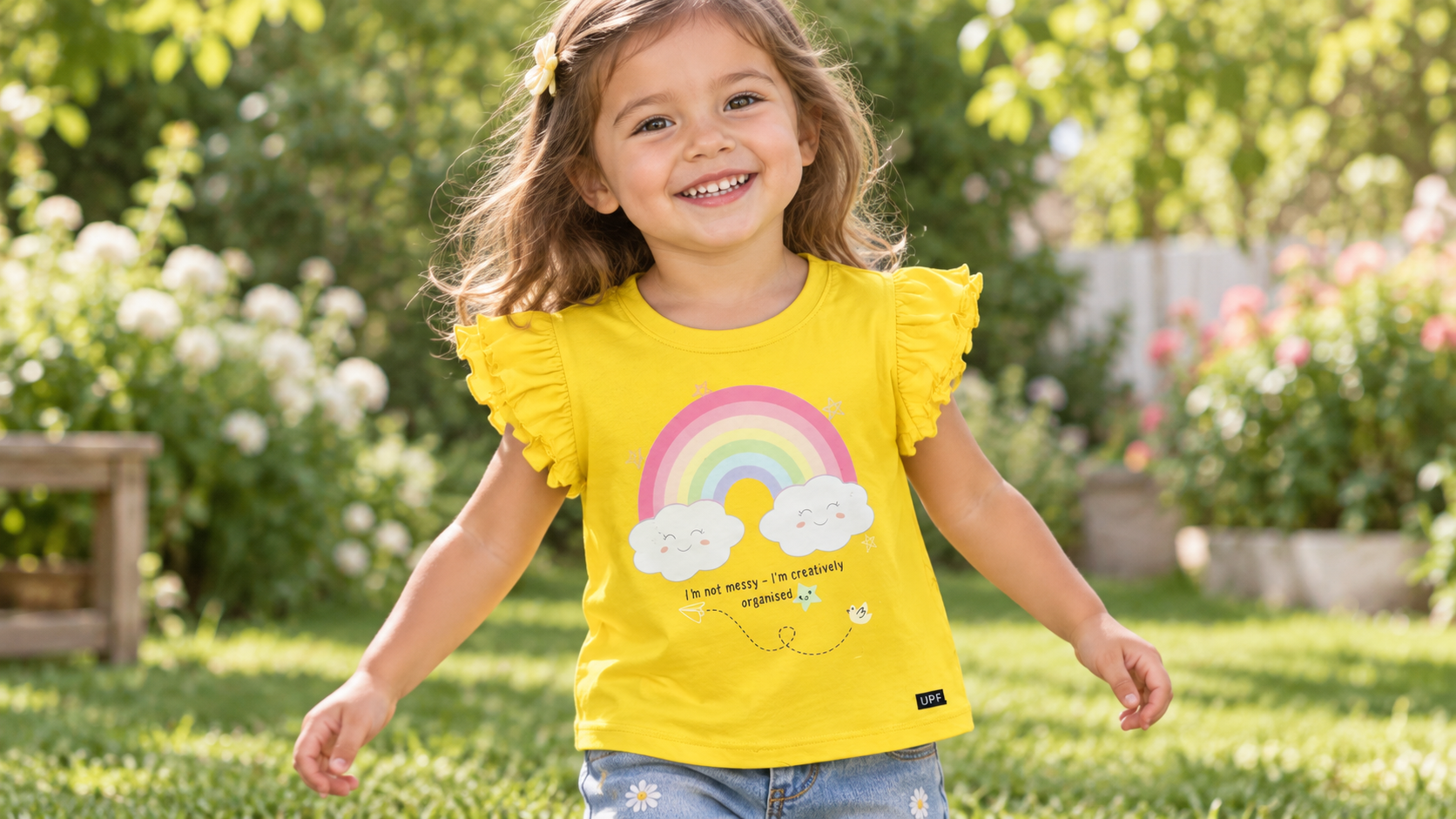

Online shopping for toddler clothes has one consistent problem: the photos are usually better than the product. Fabric looks substantial in a well-lit product shot and pills after four washes. Sizing runs small, and the return window is already closed by the time you find out.
This checklist doesn’t name specific brands. It gives you the criteria to evaluate any children’s clothing brand you’re looking at — including this one.
1
Any brand can write “organic” or “safe for kids” in a product description. Look for third-party certifications on the product page itself: GOTS for organic cotton baby clothes and organic-fiber claims, OEKO-TEX Standard 100 for chemical-safety claims, or a named testing standard for UPF UPF 50+ coverage clothing claims. If the certification isn’t named and verifiable, treat it as marketing rather than documentation.
2
A “2T” from one brand may fit like a “3T” from another. Any brand worth buying from publishes chest, waist, and height measurements alongside age labels — the same way we break down sizing across toddler boys’ and girls’ clothing. If the only size guidance is an age range, you’re guessing — and that guess gets more expensive the more you order at once.
3
Look for clear, specific care instructions — machine-washable and tumble-dry-friendly is a meaningful convenience claim for anyone dressing an active toddler. Hand-wash-only or line-dry-only toddler clothing sounds fine in theory until the third blowout of the week. It’s also worth checking whether the fabric is described as pre-shrunk, since unshrunk cotton can drop a full size in the first wash.
4
Check the return window and whether returns require original tags. Toddler clothes often get tried on at home and stored for a season before anyone realizes the size is off — a short return window doesn’t account for that reality.
5
Flat seams, tagless labels, and reinforced knees or seat areas are easy to check for in product photos and worth a second look before buying, especially for anything marketed as an everyday basic rather than a special-occasion piece.
6
A listing that specifies where a garment was made, and how heavy or lightweight the fabric is (useful for matching a piece to the right season), generally reflects a brand willing to be specific rather than vague. If a page only says “imported” with no fabric weight or use-case guidance, that’s a gap worth noting.
A product titled “organic baby clothes” or “organic cotton baby clothes” should have a specific fiber content percentage listed — “100% GOTS-Certified Organic Cotton” and “made with organic cotton” are different claims, since the second can describe a blend. If a listing uses the word “organic” without a percentage or a named certification like GOTS, it’s reasonable to look elsewhere on the page — or ask the brand directly — before assuming the strongest possible version of that claim.
U.S. children’s clothing is subject to specific federal rules, including restrictions on drawstrings in certain outerwear sizes, lead-content limits, and flammability standards enforced through the Consumer Product Safety Commission (CPSC) under the Consumer Product Safety Improvement Act (CPSIA). You won’t always see this spelled out on a product page, but a children’s clothing brand that takes compliance seriously should be able to answer a direct question about it. Vague language like “certified safe” without naming a standard is worth treating with some skepticism.
If you’re shopping for UPF UPF 50+ coverage clothing, look specifically for a UPF number, like UPF 50+, rather than assuming any “sun-friendly” description implies lab-tested protection. The same goes for stylish UV protective clothing marketed around a look or season — style and function are separate claims, and a listing that’s clear about both is generally more trustworthy than one leaning entirely on adjectives. We go deeper into what the UPF number actually measures in our UPF 50+ fabric testing guide.
HQSaga was built around these same criteria — it’s easier to describe what we make by how it scores against the list above than to describe it any other way.
We build our everyday pieces around UPF 50+ fabric testing and organic cotton, and we keep the underlying testing and sourcing documentation on file so a parent can ask and get a real answer, not a vague one.
Every product page includes a size chart with real measurements, not just an age range. Sizes run 1T–5T.
Care instructions are listed clearly on every product page, so you know what you’re committing to before you buy.
Return details are outlined on our returns page, so you can check the window and process before you need it.
Try It Yourself
Apply the same checklist to any brand, including ours. Browse the collection when you’re ready.
Toddler clothes show up both on large marketplaces and on individual brand websites, and each has trade-offs. Marketplace listings often make comparison shopping faster, but details like fiber content or certification can sometimes be thinner or inconsistently formatted across sellers. A brand’s own website typically gives more control over how sizing charts, fiber content, and sourcing information are presented — but it’s still worth applying the same checklist rather than assuming a direct-to-brand listing is automatically more complete. Either way, the criteria don’t change: specific measurements, specific fiber content, named certifications where claimed, and a clear return policy.
Customer reviews can be genuinely useful when buying kids clothes online, particularly for sizing feedback — “ran small,” “true to size” — that a chart alone won’t capture. That said, reviews are least useful for verifying safety or certification claims, since most reviewers aren’t equipped to confirm lab testing or supply-chain documentation. That’s a question better directed at the brand directly, or checked against a certification body’s own database where one exists (GOTS, for example, allows verification of active certificates). Use reviews for fit and durability feedback, and use direct documentation for safety and sourcing claims.
Even without touching the fabric, product photography can reveal some useful signals:
None of this replaces an in-person check, but it narrows the gap between what’s promised and what’s likely to arrive.
A few practical questions are worth answering before checkout, particularly for toddler clothing you’re buying with a specific event or season in mind:
Buying baby clothes online works best when these logistics are handled before checkout rather than discovered after an item hasn’t arrived in time. See our shipping policy for reference.
It’s worth noting that this guide deliberately avoids naming or directly comparing specific competitor retailers or brands — not because there aren’t good options across the kids clothing market, but because a fair comparison requires the same documentation from every brand involved, which isn’t something this article can verify on your behalf. The checklist above is designed to work the same way no matter which specific children’s clothing brand you’re evaluating, including HQSaga, so you can apply it consistently rather than relying on any single brand’s own claims about how it stacks up against others.
Look for a specific fiber percentage and a named, verifiable certification like GOTS or OEKO-TEX Standard 100. If a listing only uses the word “organic” or “safe” with no standard or percentage attached, treat it as marketing language rather than documentation.
Age labels are approximate and brands cut garments differently, so the same label can correspond to different real measurements. A published chest, waist, and height chart is a more reliable guide than the age range alone.
Not really. Reviews are genuinely helpful for sizing and durability feedback, but most reviewers can’t verify lab testing or supply-chain documentation. For safety or certification questions, ask the brand directly or check a certification body’s own database where one exists.
Restrictions on drawstrings in certain outerwear sizes, lead-content limits, and flammability standards are enforced through the CPSC under the Consumer Product Safety Improvement Act (CPSIA). A brand serious about compliance should be able to answer direct questions about how it meets these standards.
Before. Toddler clothes are often tried on and stored for a season before a sizing issue becomes obvious, so it’s worth confirming the return window and whether original tags are required ahead of ordering more than one piece in the same size.
Buying toddler clothes online doesn’t have to be a guessing game. A brand that publishes real measurements, names its certifications, spells out care instructions, and makes its return policy easy to find is giving you what you actually need to make a good decision — and that same checklist works whether you’re evaluating a small children’s clothing brand or a large one, including HQSaga.
Shop the full HQSaga collection
Our organic cotton fabrics
What UPF 50+ actually means
Returns policy
Leave a comment