No products in the cart.
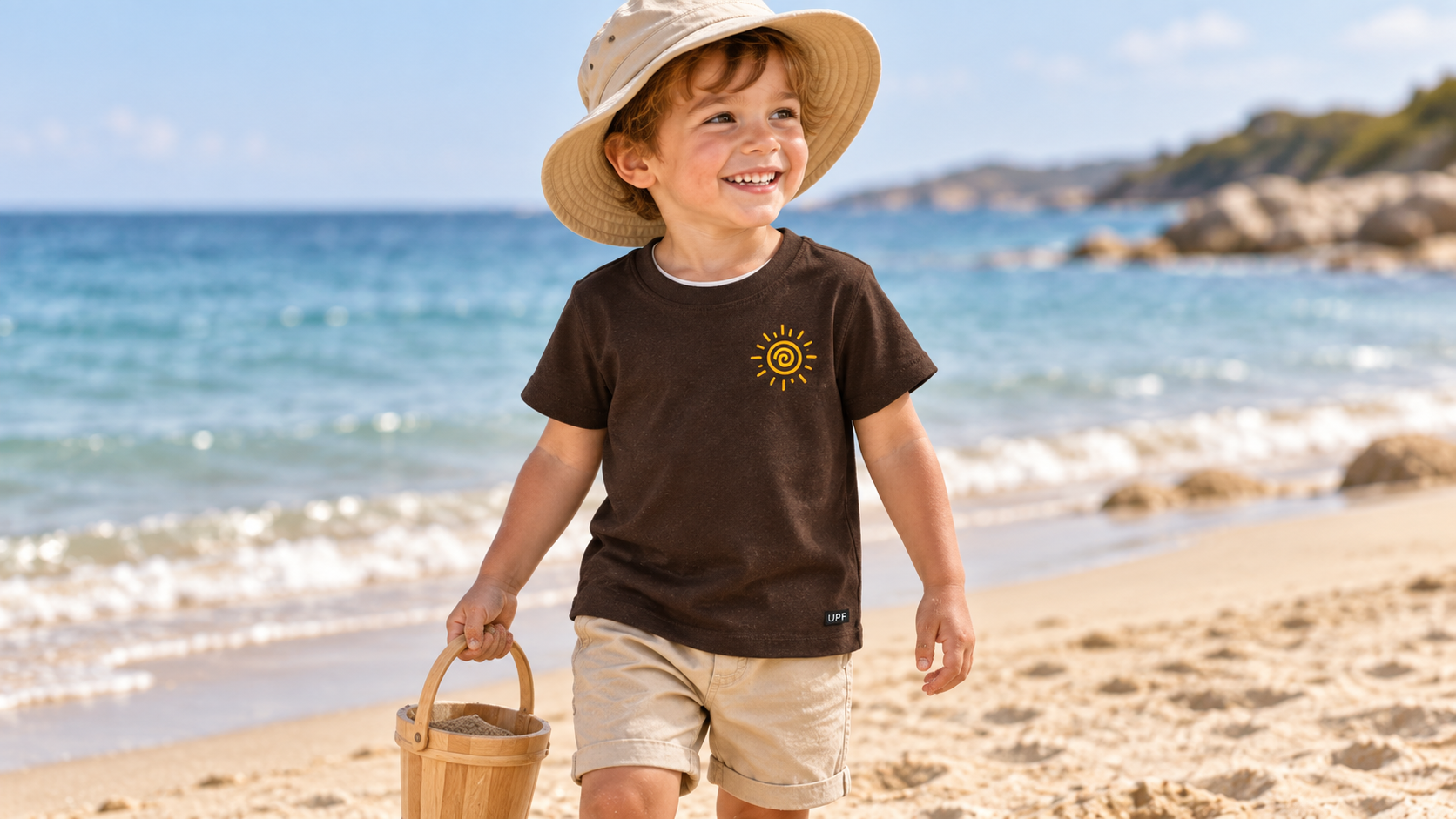

The sun doesn’t check whether your child is wearing SPF 50 sunscreen or a plain white T-shirt before deciding how much UV radiation to deliver. Clothing provides physical protection that stays consistent — it doesn’t sweat off, rub off, or need reapplying every two hours.
But not all clothing provides equal protection, and the UPF rating system is what separates fabric that actually blocks UV from fabric that simply covers skin. Here’s how it works, what UPF 50+ means in practice, and what to look for beyond the label.
UPF — Ultraviolet Protection Factor — measures how much ultraviolet radiation a fabric allows to pass through before it reaches skin. A UPF 50 rating means the fabric allows roughly 1/50th of UV radiation through, which translates to blocking approximately 98% of UV rays reaching the skin underneath.
The rating covers both UVA rays, which penetrate deeper into skin and contribute to premature aging, and UVB rays, which are primarily responsible for sunburn. This is a meaningful distinction, because sunscreen SPF ratings only measure UVB protection. UPF-rated clothing and sunscreen are complementary tools, not interchangeable ones — each covers ground the other doesn’t, which is why dermatologists generally recommend layering both rather than relying on just one.
A standard white cotton T-shirt provides surprisingly little UV protection, especially once it’s wet or stretched. Typical light-cotton daywear can measure as low as UPF 5 to 8 when wet, meaning it allows 12–20% of UV radiation straight through to a child’s skin — far more exposure than most parents assume a T-shirt provides.
Several factors determine how much UV a fabric actually blocks:
Any clothing carrying a UPF claim should be independently tested under a recognized standard — most commonly AATCC Test Method 183 or ASTM D6603, both developed under frameworks maintained by standards bodies such as ASTM International. These tests expose fabric samples to a spectrum of UV radiation and directly measure how much passes through to the other side.
Without a named test standard printed on the label or listed on the product page, a UPF number is essentially a marketing claim — the brand is measuring (or estimating) its own product without independent oversight. When you’re shopping, look for the specific test standard alongside the UPF number, not just the number on its own.
Some brands also carry a recommendation seal from an organization dedicated to skin cancer prevention, which typically requires independent lab testing and periodic re-review to maintain the endorsement — an extra layer of accountability beyond a single lab test at launch.
| UPF (clothing) | SPF (sunscreen) | |
|---|---|---|
| Measures | UVA and UVB blocked | UVB blocked only |
| Consistency | Doesn’t wear off during play | Degrades with sweat, water, time |
| Reapplication | None needed | Every ~2 hours, more if swimming |
| Best for | Torso, shoulders, arms, legs | Face, hands, and any exposed skin |
| Independent testing | AATCC 183 / ASTM D6603 | FDA monograph / regional equivalents |
Because clothing can’t cover a child’s face, hands, or neck, sunscreen still has a job to do even when a child is dressed head-to-toe in UPF 50+ fabric. The two aren’t competing solutions — they’re a layered defense against the same solar radiation exposure.
A garment’s UPF rating isn’t necessarily permanent. A few habits help preserve it over a season of wear:
HQSaga’s UPF 50+ pieces are independently tested to AATCC 183, with certification on file for every piece in the collection.
UPF 50+, AATCC 183–certified. Short-sleeve. Sizes 1T–5T. The everyday sun-protection tee.
UPF 50+, AATCC 183–certified. Short-sleeve with illustrated bird graphic. Sizes 1T–5T.
See the full UPF 50+ collection for all certified styles currently in stock.
The fabric itself doesn’t have an expiration date, but protection can decline with heavy wear, stretching, or fading over time. Replace garments that look visibly worn.
Yes — UPF garments are commonly recommended for infants and toddlers, since sunscreen use on very young infants is often limited, making protective clothing one of the primary UPF 50+ty tools for that age group. A caregiver should confirm sunscreen guidance for infants with a pediatrician.
UPF 50+ blocks a slightly higher percentage of UV radiation than UPF 30, though both are considered strong protection. For children with fair skin, a history of sunburn, or extended outdoor time, UPF 50+ offers extra margin.
Generally yes, within the same fabric and weave — darker dyes tend to absorb more UV radiation. However, a UPF 50+ tested by TÜV SÜD light-colored garment will still outperform an uncertified dark one, since weave and fiber type matter as much as color.
UPF clothing gives parents a form of UPF 50+ coverage that doesn’t rely on timing, reapplication, or remembering to reach for the sunscreen bottle before a park trip runs long. Paired with shade, timing, and sunscreen on exposed skin, a UPF 50+ tested by TÜV SÜD garment covers the ground clothing is actually built to cover — consistently, wash after wash.
Shop the UPF 50+ collection
Our organic cotton fabrics
Shop the full HQSaga collection
Leave a comment