
No products in the cart.
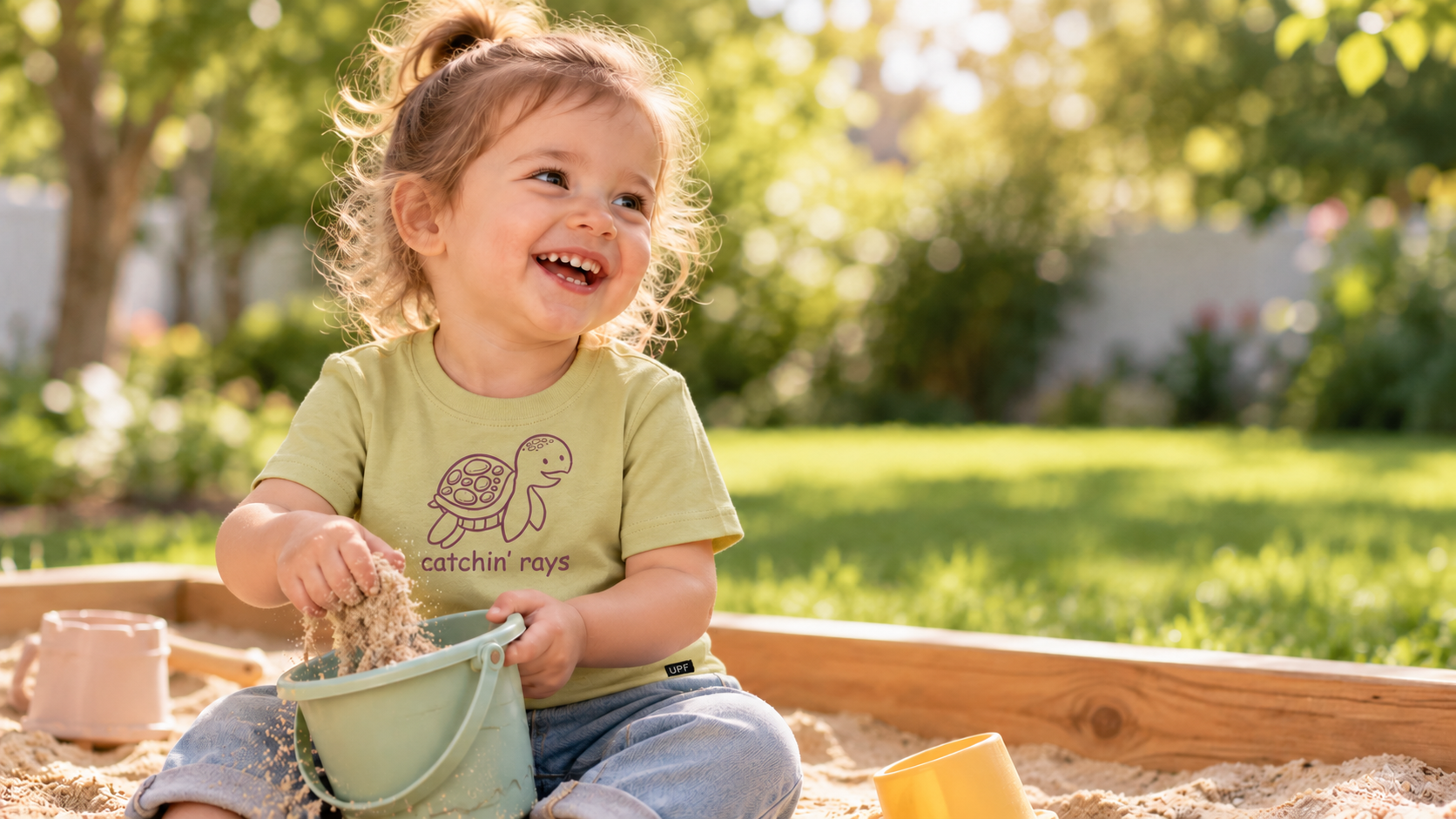
Most families have a swim shirt somewhere. It comes out for the pool, the lake, the one beach week a year, and then goes back in the drawer. Meanwhile, the rest of the week happens outside too: the walk to daycare, the playground after lunch, an hour in the backyard with a bucket and a hose.
That gap is why HQSAGA™ exists. We wanted everyday UPF clothing for kids that looks and feels like a normal tee, so sun-smart dressing isn't something you only remember on beach days. New to the rating? Our UPF explainer covers what UPF measures.
UV Doesn't Wait for a Beach Day
The CDC notes that in the continental U.S., ultraviolet rays are strongest from 10 a.m. to 4 p.m. daylight saving time. They can reach you on cloudy and cool days, and they reflect off water, cement, sand and snow. Playgrounds, sidewalks and splash pads are all part of an ordinary toddler day, so we treat UPF 50+ coverage as a daily habit rather than a vacation checklist.
The CDC also recommends protecting skin when the UV Index is 3 or higher, and wearing long sleeves and long pants or skirts when possible. Clothing is one layer of the routine. Shade, a hat, and sunscreen on uncovered skin are the others.
You Can't Judge a Shirt's UPF 50+ coverage by Looking at It
Two tees can look nearly identical on a hanger and perform very differently in the sun. What matters:
- How tightly the fabric is made. The CDC says clothing made from tightly woven fabric offers the best protection.
- Fabric weight. In a study of 100% cotton knitted fabrics, weight was the factor most strongly linked to UV protection.
- Color. Darker colors may protect more than lighter ones, according to the CDC.
- Wet or stretched fabric. The Skin Cancer Foundation notes that clothing loses some of its protective ability when it is stretched or wet.
For a sense of scale, the Skin Cancer Foundation puts a white T-shirt at a UPF of about 7, dropping to about 3 when wet. That's why the American Academy of Dermatology suggests choosing clothing with a UPF number on the label. A tested rating tells you something your eyes can't.
Want the full breakdown of what the UPF number means and how it differs from SPF? Read UPF 50+ Clothing for Kids, Explained or visit our What Is UPF 50+ page.
What "UPF 50+" Means on an HQSAGA™ Tee
- Our styles are made from 100% GOTS-Certified Organic Cotton, certified by ICEA under GOTS license GOTS-10677. See our fabrics, or read more about the Global Organic Textile Standard.
- Styles labeled UPF 50+ use fabric independently tested by TÜV SÜD.
- A UPF 50+ result means the tested fabric blocks at least 98% of UV radiation, so 2% (1/50th) gets through.
Notice what we don't say. We don't claim a shirt "blocks all UV" or "prevents sunburn." UPF 50+ is a tested fabric rating, and it only helps on the skin the fabric actually covers.
Why We Put UPF 50+ Into Everyday Basics, Not a Separate "Sun Line"
Much sun-protective kidswear is designed around water: rash guards, swim tops, cover-ups. Those are useful, but they aren't what most toddlers wear to daycare on a Tuesday. So we started from the other end. We designed tees and tops for ages 1–5 that feel like a regular cotton shirt, then made sure the fabric was tested for UPF 50+.
The idea is simple: if the shirt your child already wants to wear is also an organic cotton UPF tee, sun-smart dressing takes zero extra effort in the morning.
Long Sleeves for More Coverage
Because coverage matters, several of our styles are a long-sleeve UPF shirt for kids:
- Puzzle Thinker: yellow long-sleeve UPF tee with a farm maze graphic
- Sun Loading: color-block long-sleeve UPF tee with a small sun graphic
- Little Sparkle and Sweet As Can: long-sleeve tops with shoulder ruffles
- Sheep Shirt: olive long-sleeve graphic top
Short Sleeves for Hot Afternoons
For warmer days, our short-sleeve UPF 50+ toddler shirts include Catching Rays and Tiny Sun Chaser. Pair them with shade and sunscreen on bare arms, and browse everything on our UPF 50+ collection.
Where Everyday UPF Clothing Fits Into a Toddler's Week
- Daycare and preschool play. Outdoor time is often scheduled around midday. A UPF-rated tee covers the shoulders, chest and back without asking a busy teacher to do anything extra.
- Backyard and playground. Toddlers rarely stay in the shade on their own. Clothing covers what it covers, so keep a hat and sunscreen for the face, neck, hands and legs.
- Walks and errands. A long-sleeve tee is an easy layer for stroller walks that run longer than planned.
In every case, sunscreen still matters on exposed skin. EPA guidance is to reapply every two hours, even on cloudy days, and after swimming or sweating.
How to Choose Sun Protective Clothing for Toddlers They'll Actually Wear
- Look for a stated UPF rating and who tested it. "Sun-friendly" or "breathable" isn't a rating.
- Think about coverage. Long sleeves cover more skin than short sleeves.
- Get the fit right. Stretched fabric can let more UV through, so a tee that's too tight isn't ideal. Our Size and Fit Guide covers 1T–5T measurements.
- Read the fiber content. If organic cotton matters to you, look for a certification and license number, not just the word "organic." See Why Organic Cotton Matters (GOTS Explained).
- Follow the care label. Our care guide explains why.
- Pick something they like. A shirt that stays in the drawer doesn't protect anyone.
Frequently Asked Questions
Does a UPF shirt replace sunscreen?
No. UPF clothing only protects the skin it covers. Exposed skin still needs sunscreen, along with shade and a hat.
Isn't a regular cotton T-shirt enough?
It depends on the fabric. The Skin Cancer Foundation estimates a white T-shirt at about UPF 7, and lower when wet. A tested UPF rating removes the guesswork.
Are HQSAGA™ tees only for summer?
No. They're everyday tees. UV doesn't disappear in cooler months; see UPF 50+ coverage in Winter: 5 UV Myths.
What ages and sizes do you make?
Our current styles come in 1T–5T and are designed for ages 1–5. Learn more about HQSAGA™.
How do I care for UPF clothing?
Follow the care label: machine wash cold with like colors, use mild detergent, avoid bleach, and tumble dry low or hang dry. More in our care guide, or visit our FAQ.
Leave a comment